

Bible For Women-Holy Bible KJV review
 Analysis by GetAllApps
I’d recommend Bible For Women-Holy Bible KJV to someone who wants a faith-focused reading habit that feels approachable rather than like another item on a packed to-do list. Its emphasis on scripture, prayer, and devotional reflection gives it a clear purpose: helping Christian women bring a brief moment of spiritual attention into an ordinary day. The trade-off is that a focused devotional app is not automatically the best replacement for a full-featured Bible study tool.
A devotional companion, not just a reading shelf
This is a free Books & Reference app from Bíblia Offline, built around a Christian women’s audience. I find that focus useful when I want encouragement and a small prompt for reflection rather than an open-ended reference library. The app’s identity is more personal and devotional than academic: it aims to support a rhythm of reading and prayer, not to turn every session into a deep textual investigation.
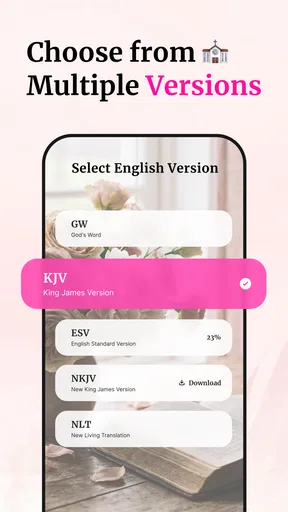
The name points to the King James Version, which matters for readers who already enjoy its traditional language or use it in church. That style can feel reverent and familiar, but it is not equally easy for everyone. If older phrasing slows you down or makes a passage hard to understand, a modern-language Bible may be a better choice for close reading. I would treat this app as a companion for devotional time, not assume that one translation suits every reader or purpose.
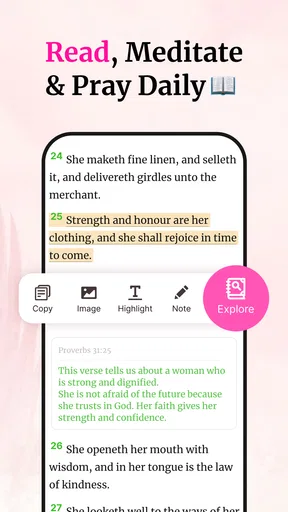
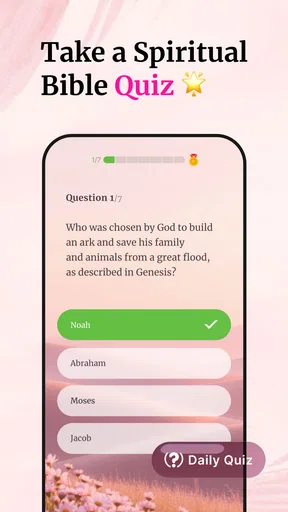
Its strongest practical idea is the combination of scripture, prayers, and devotional material. Those elements can help answer the everyday question of what to do after opening a Bible app. A verse can give you a starting point; a prayer can turn reading into a moment of response; a devotional can offer a prompt for thinking beyond the words on the screen. That sequence is more guided than simply opening a digital Bible and deciding where to begin.
Why the format can work in a busy routine
Imagine having a few quiet minutes before the household wakes up, or taking a short break between errands. In that situation, a devotional prompt can be easier to approach than a plan that expects a long reading session. I like the idea of using the app as a gentle entry point: read a passage, pause over one thought, and carry that thought into the rest of the day. The value is not that a phone creates extra time, but that a prepared prompt reduces the effort of choosing how to use a small amount of it.
A useful habit is to keep the session modest. Rather than treating devotional reading as something that must be completed perfectly, choose one passage or reflection and allow yourself to stop there. If a topic raises a question, note it for later study instead of trying to resolve it immediately on a small screen. That makes the app more suitable for brief reflection while leaving room for a printed Bible, a study resource, or a longer reading session when you want more depth.
The app’s offline identity is especially relevant to its intended role. A reader who wants access to Bible material without relying on a steady connection may find that appealing, particularly when traveling or stepping away from mobile service. I would still make a practical check before depending on it: open the content you plan to use while connected, then see what remains available when offline. That simple test helps avoid discovering at an inconvenient moment that a particular page or resource needs a connection.
Another small but meaningful workflow is to use devotional reading as a bridge rather than a substitute. If a verse catches your attention, read the surrounding passage in context and consider whether the devotional’s theme reflects the wider text. This is a good habit with any short-form religious content, since a brief reflection necessarily selects one angle. The app can make it easier to begin; your own reading can keep that beginning grounded.
What its popularity does—and does not—tell me
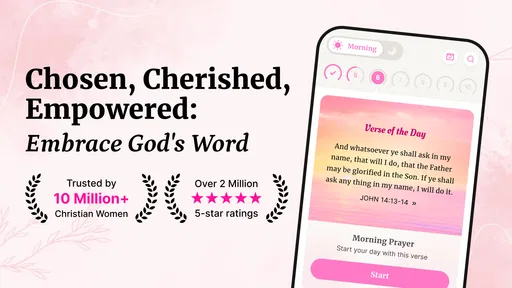
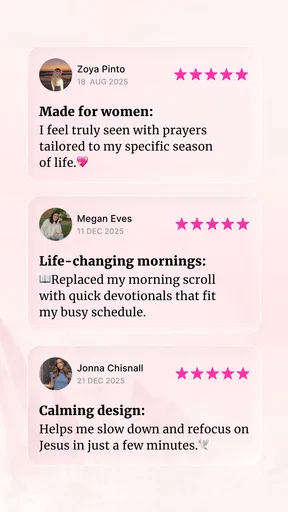
The app has a 4.9 average from around 3.9 million ratings, and it has passed 10 million installs. Those figures suggest that many people have found a reason to try it, but they cannot tell me whether its devotional tone, translation, or reading approach will suit you personally. I’d use them as a sign that it is an established choice in its niche, then judge it by whether its content and presentation fit the way you actually pray and read.
It is rated for Everyone, which makes the audience broad in age, though the devotional framing is specifically directed toward women. That focus may feel welcoming if you want reflections written with that audience in mind. It may feel less relevant if you prefer devotional material aimed at a mixed audience, or if you want a neutral reference experience without a gender-specific frame. The intended audience is a strength when it matches you and a reason to look elsewhere when it does not.
The app is free to start, with in-app purchases ranging from $1.99 to $59.99 per item. I’d recommend approaching any optional purchase deliberately: first establish that the reading style is one you’ll return to, then decide whether an extra is worth paying for. The broad range means the most expensive option is not a sensible default for every reader. If you only want a simple devotional routine, begin with what is available without paying and avoid treating a purchase as necessary to prove commitment.
The limitation: a narrow lens can become a constraint
My main reservation is not that a women-focused devotional app has a narrow purpose, but that this purpose may be narrower than some readers need. A guided reflection can be comforting and convenient, yet it may not provide the tools someone wants for comparing translations, researching historical context, following cross-references, or preparing a detailed Bible study. If those are your regular needs, a dedicated study Bible app or a print study edition is likely to serve you better.
The King James wording can also create friction. Its cadence has beauty and familiarity for many readers, but some expressions may require more effort, especially for someone new to Bible reading or reading in a second language. In that case, I would not force myself to use this as my only Bible. A clear contemporary translation can make comprehension easier, while this app can remain a place for prayerful reflection if its devotional content resonates.
Short devotional material also has an unavoidable limit: it can suggest a way into a passage, but it cannot do all the interpretive work for you. A thought-provoking prompt is not the same as context, and a comforting message is not a substitute for reading what comes before and after a verse. I suggest treating the reflections as invitations to consider scripture, not as the final word on what a passage means. That distinction helps preserve the app’s usefulness without asking it to be a study library.
There is also a practical question of fit. Some people prefer to read from a physical Bible because it keeps them away from phone distractions. Others want a reference app with a broad set of tools rather than a devotional path. If either describes you, the digital format or the app’s particular emphasis may not improve your routine. I would choose it only if having a compact, faith-centered prompt on your phone makes it more likely that you will pause and read.
Who I think will get the most from it
I see the best fit as a Christian woman who wants a low-friction way to add scripture and prayer to a day that is already full. It may also suit someone returning to devotional reading who appreciates being given a starting point instead of facing a blank page. If you enjoy the King James Version and want a reflective rather than scholarly experience, the app’s central idea is likely to make sense quickly.
It is less suited to readers who want extensive study controls, multiple translation perspectives, or a strictly general-purpose Bible reference tool. It may also be the wrong choice if traditional English feels like a barrier or if you dislike devotional writing that speaks to a particular audience. In those cases, look for a Bible app centered on the features you actually use, or pair a preferred translation with a separate prayer journal. There is no need to keep one app in charge of every part of your spiritual practice.
The current version is 0.9.0 and is listed for devices running Android 7.0 or later. Those details matter if you are deciding whether your phone can run it, but I would still install it only with a clear idea of what you want from it: a short devotional pause, a prayer prompt, or offline reading. A focused trial is more revealing than browsing through content without a routine. Try it at the time of day when you are most likely to use it, and notice whether the material helps you return consistently or feels like another notification competing for attention.
My verdict after weighing the trade-offs
Bible For Women-Holy Bible KJV makes the most sense as a guided devotional companion for readers who appreciate a women-centered Christian perspective and the language of the King James Version. Its combination of scripture, prayer, and reflection offers a clearer starting point than an unstructured digital Bible, especially when you have only a few minutes. I would recommend it to someone looking to build a small, repeatable moment of faith into everyday life.
I would not recommend relying on it as the only tool for serious Bible study, or choosing it simply because it is popular. The traditional wording and devotional focus are real matters of taste, and a different translation or a more research-oriented app may better match your needs. It is free to begin, though optional purchases are available, so you can assess the fit before spending anything. For the right reader, its value is straightforward: it helps make a brief pause for reading and prayer easier to begin. For everyone else, a broader Bible reference app or a physical Bible may be a more natural choice.
Pros and cons
Pros
- Offers a dedicated reading experience for women seeking faith-based content.
- KJV wording provides a traditional Bible translation.
- Useful for reading scripture during quiet moments.
- Can support a regular personal Bible reading routine.
- A focused Bible app may be easier to navigate than general reading apps.
Cons
- The King James wording may feel dated to some readers.
- KJV text may be harder to understand than modern translations.
- The app may not suit readers looking for multiple Bible translations.
- Faith-focused content may feel less relevant to general readers.
- Some features may require an internet connection.


